Neurodiversity
Exploring different ways of thinking and learning.
Neurodiversity Overview
Neurodiversity is not a small-group issue. Around 15 to 20% of people worldwide are neurodivergent, as many as one in five of us. That includes autism, ADHD, dyslexia and dyspraxia. Hong Kong is no different: you already work with, teach or live near neurodivergent people, whether you know it or not.
Here is the blind spot. People assume disability looks a certain way. It doesn’t. Most neurodivergent differences are invisible, and invisibility has a price. In classrooms, offices and public spaces, a difference nobody can see gets read as rudeness, laziness or bad behaviour.
This Voice is here so that the next time someone around you acts differently, your first response is understanding, not judgement.
“Did You Know?” Quiz
Stories about Neurodivergence
A common tension: Alex
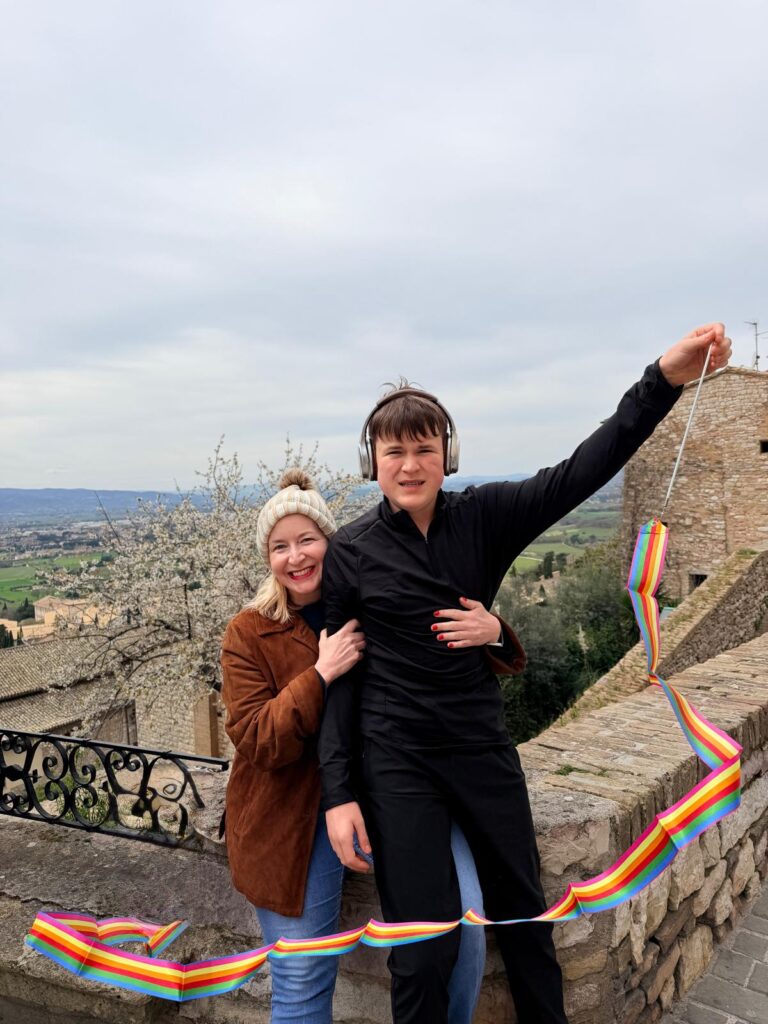
Alex is now 12. But when he was younger, something happened that his family hasn’t forgotten.
During a family outing, Alex needed to use the only bathroom available, one reserved for the disabled. The person holding the keys took one look at him and said no. Just like that.
Alex is autistic and largely non-speaking. He communicates through limited words and an AAC device, a communication aid that speaks the words he can’t say out loud. What the staff member saw was a boy who, on the surface, seemed fine. What they didn’t see was that Alex had no way to explain himself or wait.
He had an accident.
“He didn’t look disabled,” his mother Mary says, “and because the person holding the keys to the bathroom didn’t understand that disabilities and differences may not be visible, he had an accident.”
That moment became the turning point. It is also what Talos Foundation was built to prevent from happening to anyone else.
What's going on here?
The phrase “you don’t look disabled” sounds harmless. It isn’t. It reflects a deeply ingrained assumption that disability is always visible: a wheelchair, a cane, something you can see. Most disabilities aren’t. For neurodivergent people, this assumption creates barriers in everyday situations, access to facilities, services, and support, that neurotypical people never have to think about. And for non-speaking or minimally verbal individuals like Alex, the inability to self-advocate in the moment makes those barriers even harder to overcome. In Hong Kong, where public awareness of invisible disabilities remains low, these encounters are common. The fix isn’t complicated: it starts with understanding that you cannot tell if someone is disabled just by looking at them.
A mundane hidden challenge: Sophie
Staying present in a conversation sounds simple. For me, it rarely is.
While most people just talk, I’m quietly managing a mental checklist in the background. Am I making enough eye contact? Not too much? Are my hands still? Is my posture okay? Does my expression match what I’m feeling? All of that, while also trying to actually listen to what the other person is saying.
When I get nervous, my body reacts before I can stop it. I pick at the skin around my fingers. I don’t want to. I’m not always aware I’m doing it until it’s already happening. So one part of me is in the conversation, and another part is working hard to hold everything together and keep what’s happening inside from showing on the outside.
From the outside, it probably looks like nothing. But by the end of an ordinary exchange, I’m often genuinely tired, not from the conversation itself, but from everything it took to get through it.
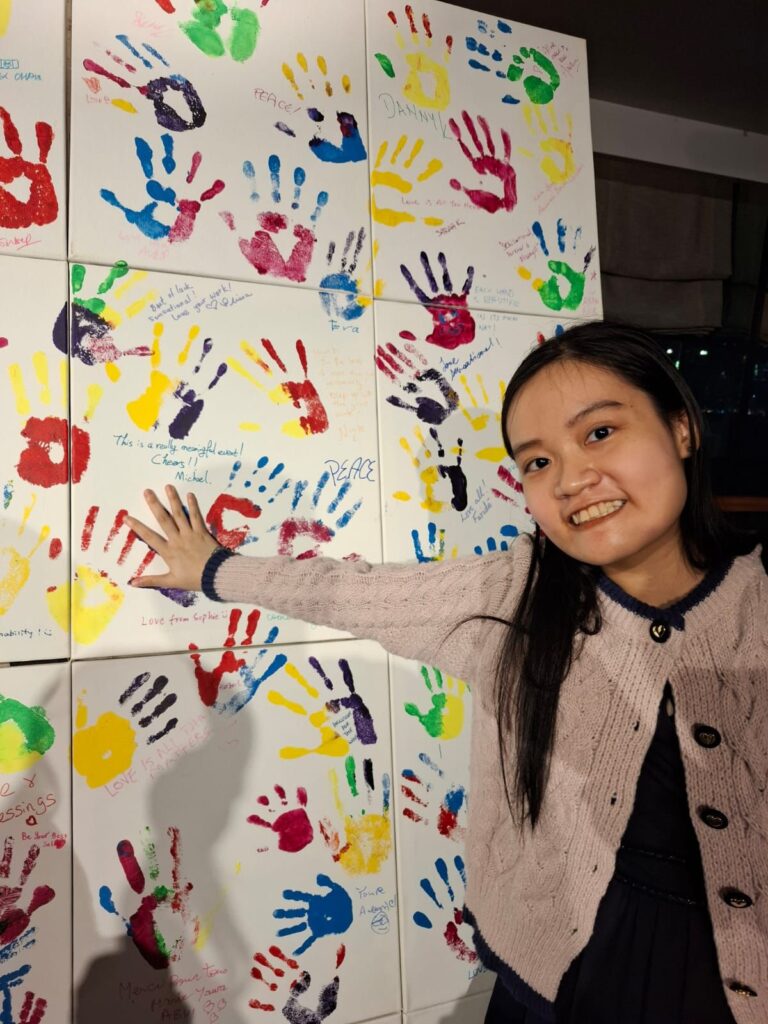
What's going on here?
What looks like a simple conversation can require enormous invisible effort for neurodivergent people. Managing eye contact, body language and physical reactions all at once, while also trying to be present, is mentally exhausting in a way that doesn’t show. The common misunderstanding is that if someone seems fine, they are fine. But seeming fine is often the result of significant effort. For many neurodivergent people, masking is a daily reality that builds up over time and leads to burnout. In Hong Kong, where composure and social performance are prized, the pressure is higher and so are the stakes. One flat evening can cool a friendship. Poor eye contact can sink a job interview. A manager can read exhaustion as not caring. Ordinary interactions become a constant test, one most people around you don’t even know you’re taking.
An Ally's lens: Katie & Michelle
We were at the airport in Beijing, flying home after a holiday that had been harder than we expected. At security, the officer needed to do a body search. Katie couldn’t cope with it. She had a meltdown and went down to the floor.
Security guards came over. Katie still needed the search before we could pass, so they waited. One of the guards explained to us, through a translator app on his phone, what would happen next: if Katie could calm down, the search could go ahead and we could get through. He was trying to help. But if Katie could calm down that easily, we would have been through security already. That’s kind of the whole problem with a meltdown.
Eventually she calmed enough for the search to happen. We had a few more meltdowns before we managed to board. But we got there in the end.
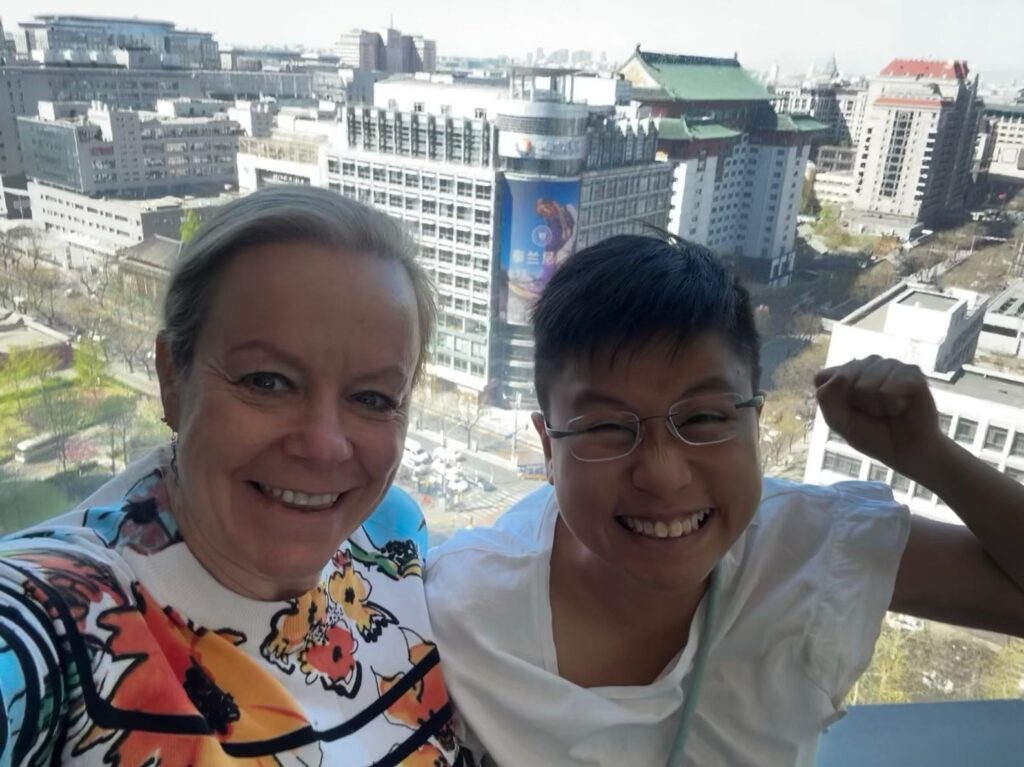
What's going on here?
A meltdown isn’t a tantrum, and it isn’t something a person can just switch off. It’s sensory overload pushed past its limit: a nervous system overwhelmed by unexpected touch, unfamiliar surroundings, noise and the stress of travel, shutting down or spilling over. Telling someone to “calm down” assumes it’s a choice. It isn’t. The guard meant well. But “calm down and you can go through” misses the point entirely. Nobody chooses to have a meltdown in an airport security line. If Katie could have calmed down on command, there wouldn’t have been a meltdown to begin with. For neurodivergent people and their families, travel is one of the hardest environments: unpredictable, full of physical contact, and governed by rules that don’t bend. Patience and waiting both help. Understanding why “just calm down” doesn’t work helps most of all.
Key Terms
Neurodiversity: The idea that differences in how people’s brains work are natural variations, not defects.
Masking: When a neurodivergent person hides their natural behaviours to appear neurotypical. Exhausting, often unconscious, can lead to burnout.
Stimming: Repetitive movements or sounds that help neurodivergent people regulate emotions and sensory experience. Not a problem to be stopped.
Sensory Overload: When the brain receives more sensory input than it can process: noise, light, crowds, textures.
Invisible Disability: A condition that significantly affects daily life but isn’t immediately visible to others.
Latest resources in this Voice
How-to-Say Guide: Neurodiversity
The words are the hard part. Here are three you can borrow.
Dos and don’ts on designing for accessibility (opens in a new tab)
Open resource from the UK government. Plain-language poster-style dos and don'ts for designing accessible content, split by need (low vision, D/deaf and hard of…
Masking Is Life-Changingly Exhausting: The Experience of Autistic Masking and Unmasking (opens in a new tab)
Autistic Unmasking & Relational Intimacy. Miller, Rees and Pearson (2021), Autism in Adulthood. Takeaway: masking in intimate relationships causes severe emotional burnout, and unmasking…
Want to know who's doing the good work in this space?
Explore organisations and service providers working in neurodiversity, vetted and part of our Directory.