
Gender Identity & Expression
Exploring gender beyond the binary and self-expression.
Gender Identity & Expression Overview
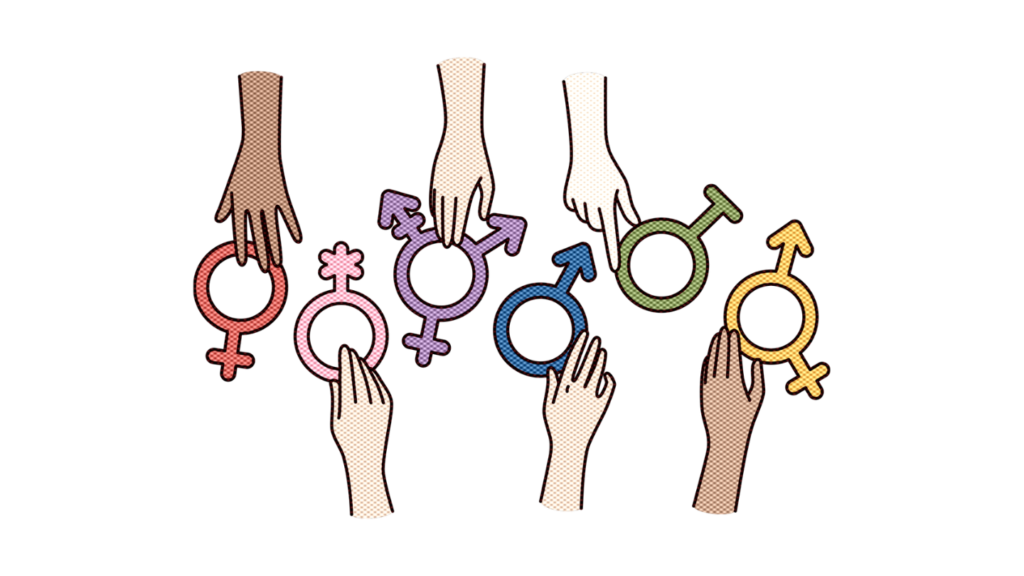
Gender Identity & Expression isn’t about rigid legal definitions or medical jargon. It’s about the everyday reality of gender diversity, and it’s wider than most people assume: gender gets flattened into two boxes, “normal” and “trans,” when in fact gender expression shapes everyone’s life, cisgender or not.
A common blind spot is assuming you can tell someone’s gender just by looking at them, or reducing lived experience to “surgeries.” The real tension is often mundane: HR systems that reject a chosen name, or the anxiety of choosing a public restroom, for trans and gender-diverse people alike.
We’re here to bridge those everyday gaps.
“Did You Know?” Quiz
Stories about Gender Identity & Expression
A common tension: The Gym
Winnie (she/her)
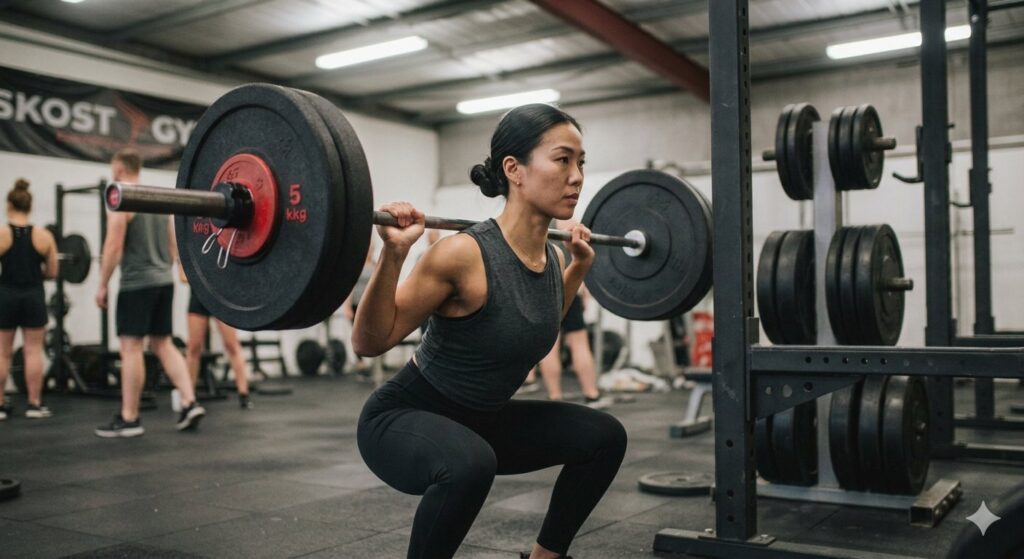
I used to avoid the weights section of the gym completely. It felt like walking into a room that wasn’t built for me, and honestly, it scared me a little. I’d rather stick to the “safer” equipment.
At the same time, my mum’s voice was always in my head: don’t get too big, don’t get too muscular, nobody will find you pretty. So for years I stuck to cardio, anything that wouldn’t build bulky muscle. I didn’t think building muscle was for me.
Then I learned at a workshop that building muscle is actually more beneficial for women, because of our body anatomy, it’s good for our bones and more. Not a nice-to-have. A need.
I started slow, then heavier. A guy at the squat rack said, ‘Whoa, didn’t expect that from you,’ like it was a compliment and an insult in the same breath. I used to think a comment like that would wreck my confidence. Instead, I loaded another 5kg. My body isn’t ‘too much’ for wanting to be strong. It’s just strong. And being healthy and strong shouldn’t be gendered.
What's going on here?
What was problematic: Winnie’s mother’s warning and the stranger’s backhanded remark at the gym both police women’s bodies against the same unspoken rule, visible strength reads as “unfeminine,” so women are expected to stay small.
Why it matters: This isn’t really a compliment-versus-insult moment, it’s the exact instinct this pillar exists to name. Health guidance is consistent that resistance training protects bone density and metabolic health as people age, especially for women, yet that advice regularly loses to a cosmetic rule about what a “woman’s body” is supposed to look like.
What people misunderstand: People assume gender policing is only a trans issue. It isn’t. Cisgender women get told their bodies are too big, too muscular, too much, the exact same “too much” logic used to police trans bodies. The fix is the same either way: separate a body’s health from anyone’s opinion of what it should look like.
A mundane hidden challenge: Leo
Leo (he/him)
I was at a mutual friend’s dinner party, having a great time, until the conversation shifted to my transition. A guy I’d met briefly once before leaned across the table, his eyes wide with morbid curiosity. “Do you mind if I ask some questions? I’m just so curious,” he started, leaning in and lowering his voice, “Are you fully a guy now? I… heard you went for surgery?” The table went dead silent. Before I could deflect, he fired off another rapid-fire question: “What does your ID card actually say? And wait, do you like guys or girls? Why did you want to be a boy?” I took a deep breath. “Let me finish my pasta first!!!” I said, trying to laugh it off. But inside, I felt entirely dehumanized. He wasn’t talking to me like a person, he was examining me like a science experiment. You would never walk up to a cisgender stranger and interrogate them about their genitals, their medical history, or their private identification documents. Yet, the moment people find out I’m trans, all boundaries vanish.
What's going on here?
What was problematic: The acquaintance treated Leo as a fascinating specimen rather than a human being, immediately firing off intrusive questions about his genitals, medical history, and ID card.
Why it matters: Transgender people are constantly reduced to their anatomy or medical procedures. This hyper-fixation strips away humanity and privacy. Nobody should have to defend, justify, or expose their private life just to exist in a social space.
What people misunderstand: People often confuse morbid curiosity with “just trying to learn,” thinking these questions show they’re open-minded or supportive. They don’t realize they’re demanding private, vulnerable information they would never dream of asking a cisgender person. To be clear, curiosity itself isn’t the problem, having questions is completely natural. The problem is firing them off publicly and uninvited, about someone’s body and medical history, the way you’d never interrogate a stranger’s medical file at a dinner table. If you’re curious, ask privately, and let the person choose whether to answer.
An ally's lens: Jessica and Maya
Jessica (she/her)
I was so excited to see my colleague, Maya, at the company’s annual dinner. She looked absolutely stunning in her new dress. Wanting to hype her up, I rushed over and told her, “Oh my god, Maya, you look gorgeous! Seriously, you’re prettier than most normal girls! I honestly couldn’t even tell you were trans when you first joined. You just pass.” I meant it as the highest possible praise. I know transitioning is hard, and I wanted her to feel validated and beautiful. But instead of being happy, Maya’s smile completely froze. She looked deeply uncomfortable, mumbled a quick thank you, and immediately made an excuse to go get a drink. She avoided me for the rest of the night. I stood there feeling bewildered and, honestly, a little hurt. Why was she upset? Isn’t the whole point of transitioning to look like a cisgender woman? I was just trying to be a supportive friend and tell her she succeeded. It feels like no matter how hard I try to be a good ally, I always end up saying the wrong thing.

What's going on here?
What was problematic: Jessica’s backhanded compliment implied that being transgender is inherently undesirable. Comparing Maya to “normal” girls othered her, treating trans women as a separate, inferior category to cisgender women.
Why it matters: The trans community constantly fights the narrative that their bodies are “less than.” Compliments focused on “passing” reinforce cis-normative standards, suggesting a trans person’s worth depends on mimicking cisgender appearance, and erase the validity of trans identity itself. The same “passing” pressure lands on non-binary people too, many of whom don’t want to read as strictly male or female at all, and on cisgender people who get told they’re “too masculine” or “too soft” for their gender. “Passing” culture polices everyone, it just falls hardest on trans people.
What people misunderstand: Well-meaning allies often assume “passing” as cisgender is the ultimate goal for every trans person, and don’t realize praising someone for “not looking trans” can insult the broader trans community. A true compliment celebrates a person’s beauty without measuring them against a cisgender yardstick.
Key Terms
Gender Identity & Expression: Gender identity is your internal, deeply held sense of who you are, a man, a woman, or somewhere else on the spectrum, regardless of the sex you were assigned at birth. Gender expression is how you show that to the world: through clothes, voice, or mannerisms. The two aren’t the same, and neither is fixed by the other, a woman can wear a suit and short hair, a man can love makeup, without either being any less who they say they are.
Assigned Gender at Birth (AGAB): This is the gender assigned to you at birth, which goes on your birth certificate and other legal records. It’s typically determined by a doctor based on visible anatomy, and doesn’t account for other sex variations such as intersex, so it’s important to understand gender as a spectrum. Your AGAB may or may not match your gender identity later in life.
Cisgender: This simply means your gender identity matches the sex you were assigned at birth (like most people). Understanding this word helps us talk about our different experiences equally, without treating people who are not cisgender as the “abnormal” ones.
Transgender & Non-binary: “Transgender” means your gender identity differs from the sex you were assigned at birth. “Non-binary” falls under this umbrella, meaning you don’t fit neatly into just the “man” or “woman” boxes, you might be both, neither, or somewhere in between.
Passing: “Passing” means your perceived gender, how others read you, aligns with your gender identity. This is typically used to talk about transgender people’s experience, but it’s important to note this pressure affects everyone: it’s the same instinct behind policing how tall a woman “should” be, or whether a man’s voice is “too soft,” and it shapes how all of us get treated based on gender.
Latest resources in this Voice
How-to-Say Guide: Gender Identity & Expression
Gender Identity & Expression The words are the hard part. Here are three you can borrow. Founding Voice Quarks → Client call How to…
Meeting Transgender Persons at the Workplace (opens in a new tab)
A booklet from Gender Empowerment 性別空間 for employers on supporting transgender staff and customers. English and Traditional Chinese versions only.
明心見性:香港跨性別青年文集 (opens in a new tab)
An anthology of writing by transgender young people in Hong Kong. In Chinese, available as an e-book on Readmoo, Apple Books and Google Play.
Want to know who's doing the good work in this space?
Explore organisations and service providers working in gender identity & expression, vetted and part of our Directory.